

Which PCOS supplements can help?
Experiencing PCOS symptoms? Supplements can help, but choosing the right ones can be challenging with a plethora of options available.
Read the article to explore some of the best supplements for PCOS.
What is PCOS?
PCOS (Polycystic Ovary Syndrome) is a common hormonal disorder in women, leading to problems in ovaries and causing irregularity in the menstrual cycle. It is a condition in which androgen (a male sex hormone) levels may spike, and small follicles appear on one or both ovaries.
Polycystic Ovary Syndrome (PCOS) is a reproductive disorder with multiple comorbidities that can affect metabolic processes. It is often associated with insulin resistance and a higher risk of developing type 2 diabetes. Two of three symptoms diagnosed by health-care practitioners are indicative of this disorder:
1. lack of or irregular menstruation affecting ovulation
2. higher androgen levels
3. multiple, small cysts in the ovaries
PCOS affects between 6% and 12% of women in the U.S., which equates to about 5 million women with reduced chances of conception.
Its symptoms include irregular menses, thinning hair on the scalp, excess hair growth on the face and body, acne, weight gain, and inability to lose weight. It can also cause dark or thick skin patches in the armpits, and back of the neck (acanthosis nigricans), insulin resistance, dysregulated blood sugar, and hair thinning, including male pattern hair loss. It is a common cause of infertility.
How can Supplements Benefit Someone with PCOS?
By improving insulin sensitivity, reducing inflammation, optimizing hormonal balance, and filling common nutrient deficiencies (such as vitamin D) seen in 67-85% of women with PCOS, supplements can help with PCOS Symptoms. Additionally, supplements can enhance ovulation, decrease androgens (male hormones), support fertility, and can also help reduce metabolic risk factors like insulin resistance. The evidence behind combining supplements with lifestyle change shows that cycle regularity, weight management, and pregnancy rates are positively affected by supplementation.

According to the World Health Organization, 8 to 13% of reproductive-aged women are affected by PCOS, and among them, 70% are undiagnosed. [1]
Although PCOS affects the menstrual cycle, it is not only bound to reproductive conditions. It affects various aspects of health, including endocrine imbalances, metabolic disturbances, and psychological disorders.
PCOS affects women’s overall well-being. It can cause long-term health issues such as diabetes, high blood pressure, heart disease, sleep apnea, and stroke. It has also been associated with an increased risk of anxiety and depression and is the most common cause of infertility in women.
Despite substantial research on PCOS, the exact causes of PCOS are still not clear. From a functional medicine point of view, metabolic concerns such as insulin resistance, obesity, hyperandrogenism (excess production of testosterone), and genetics play a role in its occurrence.
Managing PCOS and alleviating its symptoms requires a multidimensional approach in Functional medicine. Among them, lifestyle modification is the foremost approach. Lifestyle modifications include finding the root cause, functional nutrition work, exercise, and medical-grade therapeutic nutritional supplements.
Let us look at the best supplements for PCOS management.
[elementor-template id=”14807″]
Check Your Hormones
Detailed hormone profiling for effective and informed PCOS management.
9 Best Supplements for PCOS
Nutrient supplementation plays a pivotal role in treating PCOS. It helps regulate hormonal imbalances, insulin resistance, ovulation, and much more.
Several studies have found nutritional supplements show positive results in PCOS. [2]
In addition, supplements ease the symptoms of PCOS, like mood disturbance, irregular sleep, anxiety, migraine, PMS, and menstruation.
Therefore, PCOS supplements can be an important part of your PCOS management plan. It’s important, however, to consult your gynaecologist or a functional medicine doctor before embarking on a supplement plan.
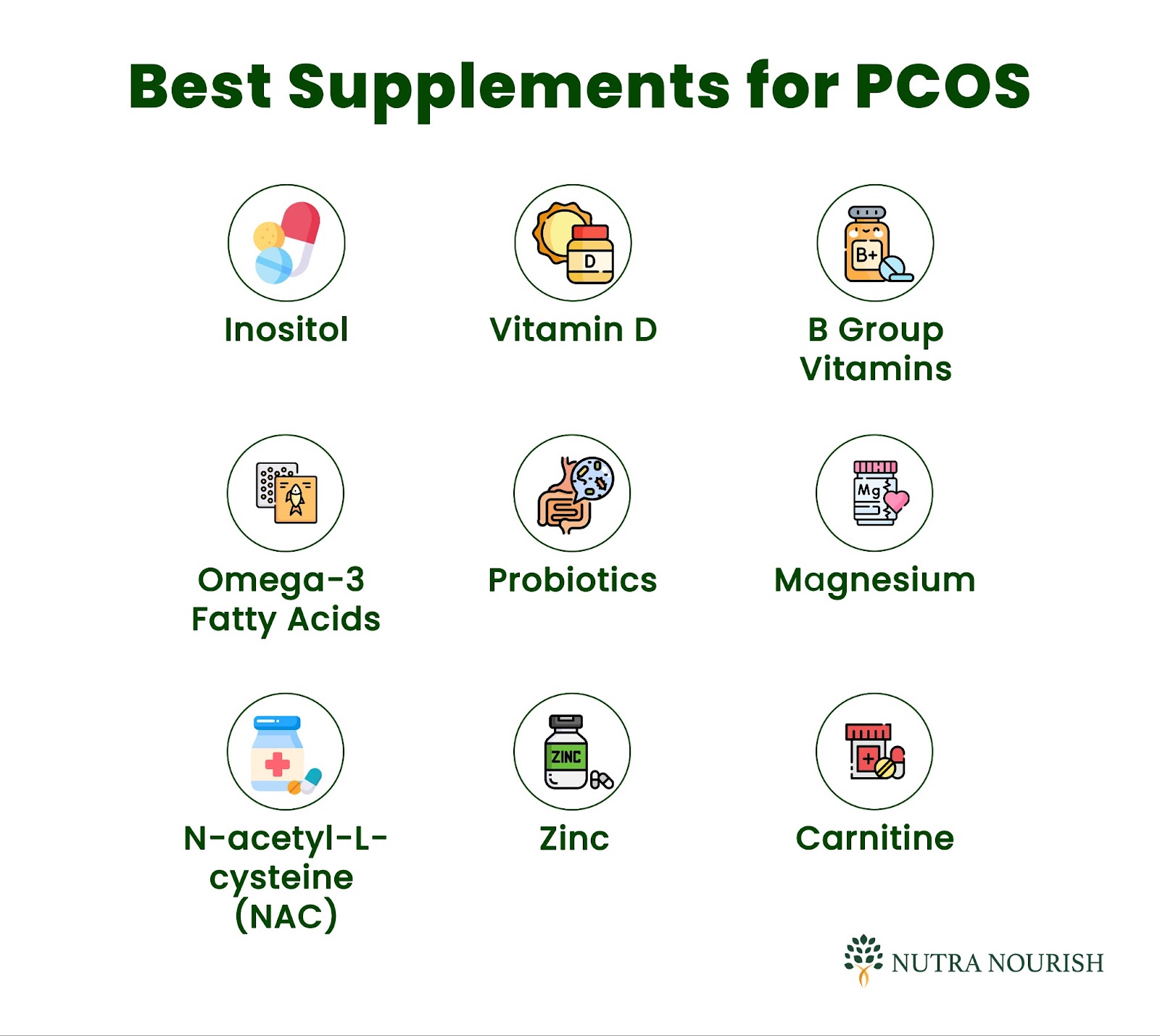
1. Inositol
Inositol is a sugar alcohol that belongs to the B complex vitamins. It has 9 stereoisomers – myo-, cis-, allo-, epi-, muco-, neo-, scyllo-, D-chiro and L-chiro- forms.
Many studies demonstrate the effectiveness of inositol in the improvement of almost all pathological conditions in PCOS, such as lower androgen levels, improved insulin levels, and the recovery of reproductive abnormalities.
The MI and DCI isomers have been recognized as the most predominant and have important functions in human physiology, such as mediating normal cell signaling from insulin and from sex and thyroid hormones.
Inositol occurs naturally in a variety of fruits, grains, and beans. However, it is bound to other compounds, making it less bioavailable, and it is difficult for the body to utilize it from food. Inositol occurs in nine different forms (called isomers). The MI and DCI isomers are recognized as the most predominant. These isomers play critical roles in human physiology, helping to balance normal hormone signaling, such as insulin, thyroid, and sex hormones (e.g., estrogen).
The forms of inositol in Sensitol™ may support the body’s response to insulin, thus supporting metabolic and hormonal processes that are influenced by healthy insulin signaling. Inositol is also an important factor for balancing female hormones by supporting healthy liver function, which is the key organ in the detoxification and clearance of excess hormones, such as estrogen and testosterone.
The combined inositol isomers myo and D-chiro are consumed in the ratio of 40:1 (MI/DCI), which is referred to as the plasma physiologic ratio. These two play a vital role in restoring ovulation, improving the female egg (oocyte) quality, and stimulating the female hormones, thus improving the menstrual cycle.
Inositol exerts vital actions to improve insulin and cholesterol levels in your body. Also, it helps manage PCOS symptoms, such as acne and mood disturbances.
A study evaluating the effects of inositol on women with PCOS concluded the following:
-
- MI inositol lowers testosterone levels overall.
-
- It may take more than 6 months to experience the positive effects of inositol on androgen levels and acne. [3]
2. Vitamin D
Vitamin D is a vital nutrient for skeletal growth, dental health, bone mineral density, regulation of serotonin levels, and regulation of calcium and phosphorus metabolism. It also plays a crucial role in PCOS management.
A review by Krul-Poel et al. revealed the connection between Vitamin D and metabolic disturbances of PCOS. The research has shown that obese women with PCOS have significantly lower serum 25-hydroxyvitamin D concentrations than non-obese women with PCOS. [4]
Another research indicated that 67-85% of PCOS women suffer from Vitamin D deficiency, and correcting that deficiency helps reduce PCOS symptoms.
Vitamin D supplements lower the abnormally increased male hormones in the body. It also promotes female egg maturation and development, thus increasing your chance of conceiving while suffering from PCOS.
3. B Group Vitamins
A general B-complex vitamin is one of the best supplements for PCOS because of the wide range of benefits these nutrients provide. Plus, some medications often prescribed for PCOS (like birth control and metformin) can actually deplete your body of many of these B vitamins (5, 6).
Vitamin B6, folate, and vitamin B12 are particularly important in optimizing hormonal balance in PCOS. These three B vitamins help to lower inflammation by breaking down an amino acid, called homocysteine, which is commonly elevated in women with PCOS. [7] Lowering homocysteine may reduce your risk factors for heart disease and other reproductive symptoms.
B Group vitamins like B6, B12, and folic acid are essential to decrease the levels of homocysteine (Hyc) in PCOS. Hyc impairs the blood flow and increases the risk for cardiovascular and reproductive symptoms in PCOS.
The research shows that regular intake of insulin increases the homocysteine in blood levels. Vitamin B6, B12, and folic acid regulate the Hyc levels. Hence, the intake of these B-group vitamins is recommended to reduce the risk of CVD and reproductive symptoms in PCOS. [8]
Women with and without insulin resistance (IR) consumed folic acid supplementation for three months. The Hyc concentration in both groups was reduced significantly. However, the rate of reduction in the Hyc concentration was higher in women without IR.
4. Omega-3 Fatty Acids
Omega-3 fatty acids are polyunsaturated fatty acids with several health benefits. The anti-inflammatory properties of Omega-3 prove to be beneficial when it comes to treating inflammatory conditions.
Omega-3 fatty acids improve your egg quality and delay ovarian aging, thus boosting fertility and increasing the chances of pregnancy. Also, the findings of a recent analysis indicate that Omega-3 fatty acids are crucial for fighting insulin resistance and treating high levels of total cholesterol (TC) in the blood.
5. Probiotics
Probiotics are microbial dietary supplements that help improve metabolism and gut health. Researchers have found a correlation between the gut microbiome and PCOS in recent years.
In women with PCOS, inflammation is a common root cause and a major contributor to insulin resistance (IR). Gut health plays a vital role in controlling inflammation. Probiotic supplements help improve gut health, reduce inflammation, and address hormonal imbalances.
Probiotic supplements lower androgen levels, normalize the menstrual cycle, improve fasting blood glucose, and help in hyperinsulinemia and hyperglycemia. [9]
6. Magnesium
Magnesium is a necessary mineral that plays a vital role in improving overall health. It helps glucose enter cells, where it is used for energy. It helps in insulin metabolism, temperature regulation, transmitting impulses to nerves, liver detoxification, and blood pressure in your body.
Did you know PCOS-diagnosed women, whether they have a healthy weight or are obese or overweight on a BMI scale, have high chances of insulin resistance?
Research indicates that around 70 to 95% of obese and 30-75% of lean women diagnosed with PCOS have insulin resistance. IR leads to Type 2 diabetes, which comes with other health repercussions affecting the circulatory, nervous, and immune systems.
Low magnesium levels may worsen insulin resistance, resulting in hormonal imbalances that affect several aspects of reproduction.
Magnesium supplements help reduce inflammation, improve insulin resistance, and alleviate several PCOS and PMS symptoms, such as cravings, cramps, sleep disorders, anxiety, and mood.
7. N-acetyl-L-cysteine (NAC)
NAC is an acylated form of L-cysteine amino acid, a precursor of an antioxidant substance, glutathione. It is a safe antioxidant with the potential to improve insulin and inflammation.
With its antioxidant properties, NAC helps improve fertility and many other metabolic aspects of PCOS. It manages high cholesterol levels and insulin resistance caused by PCOS.
Moreover, NAC protects the body against free radical damage and provides a shield against oxidative stress, thus improving immunity.
Research shows NAC improves pregnancy rates. It boosts the oocyte quality through an anti-aging effect. Also, it helps decrease androgen levels, regulate ovulation and the menstrual cycle, and improve fertility. The reduced levels of testosterone help combat other PCOS symptoms, such as facial hair growth and acne. [10]
8. Zinc
Zinc is an essential trace element responsible for the functioning of over 300 enzymes in our body. It helps regulate cell growth, hormonal balance, immunological response, and the metabolism of lipids, proteins, and carbohydrates. It plays a vital role in insulin synthesis, storage, secretion, and function.
Thus, zinc deficiency leads to many metabolic disorders such as diabetes, lipidemia, hyperglycemia, hypertriglyceridemia, PCOS, etc.
Women diagnosed with PCOS have lower levels of zinc than women without it. Hence, they experience impaired hormonal, lipid, and glucose metabolism. They are at great risk of insulin resistance and oxidative stress.
Zinc supplementation has a positive effect on insulin resistance and lipid balance in women suffering from PCOS. It helps ease other PCOS symptoms like hair loss, mood changes, PMS, fight acne, and many more.
While consuming zinc supplements, it is important to consider the form of zinc. Opt for zinc picolinate for maximum absorption rates. Avoid zinc sulfate because of its low absorption rate.
9. Carnitine
Carnitine is an ammonium compound produced in the body, effective in glucose and fatty acid metabolism. Thus, it helps the body to digest fat and convert it into energy.
Carnitine supplementation reduces body weight, waist, and hip circumference in obese PCOS females. Also, it manages insulin resistance, therefore managing the PCOS symptoms.
One of the clinical studies has suggested that 12 weeks of carnitine supplementation in PCOS-diagnosed women reduces BMI, weight, waist circumference, and hip circumference. Also, there are positive changes in glycemic control. [11]
Are There Supplements You Should Avoid with PCOS?
There are no supplements universally prohibited for PCOS, but caution is essential. Avoid proprietary blends or herbal mixtures lacking transparency on ingredients and dosages, as they increase risks of overdosing, drug interactions, or allergic reactions.
High doses of vitamin D (typically above 4,000-10,000 IU daily) may lead to hypercalcemia, especially with concurrent calcium intake or elevated baseline levels. Excessive zinc intake (>40 mg daily long-term) can induce copper deficiency, potentially causing anemia or neutropenia.
Common PCOS supplements like berberine and N-acetylcysteine (NAC) may cause gastrointestinal side effects (e.g., nausea, diarrhea) in some users. Berberine is generally not recommended during pregnancy due to limited safety data, while NAC should only be used during pregnancy under medical supervision despite some reassuring studies.
Test baseline levels (e.g., vitamin D, zinc, copper) before starting supplementation and consult a qualified healthcare professional whenever possible. This tailors intake to individual needs, minimizes risks, and addresses the limited long-term safety data for some supplements like berberine or inositol.
Lifestyle Changes that can help with PCOS
- Healthy Eating: Emphasize eating protein and fibre-rich food while using low-glycaemic index foods such as whole grains, vegetables, and lean protein (and all other food) to maintain stable blood sugar levels and decrease insulin resistance, both of which are major contributors to symptoms of PCOS.
Be active regularly: Every day, you participate in 30 minutes of different forms of exercise with the goal of strengthening the body with weights (at least three times per week) and moderate cardiovascular exercise such as walking fast or biking
- to assist with increasing insulin sensitivity, aid in weight management, and maintain regularity in menstrual cycles.
- Stress Management: Spend 10-15 minutes daily either meditating, practising deep breathing, or using mindfulness as a stress reduction tool; try to get at least seven to nine hours of sleep each night to reduce cortisol levels, as it can add to increased androgen levels and/or a hormonal imbalance.
- Manage Your Weight: If you are considered overweight and lose five to ten percent of your body’s initial weight, you will once again begin to ovulate and notice an improvement in your symptoms; to most accurately track your progress, track your caloric intake on a weekly basis by monitoring your level of caloric intake to maintain a sustainable caloric deficit along with the consumption of nutrient-dense foods.
- Promote Your Gut Health: Introduce fermented foods such as yogurt or kefir into your diet, or consider taking synbiotics or probiotics to reduce inflammation and increase metabolism; reduce consumption of processed sugars and other toxic substances found in plastic containers.
Conclusion
At Nutra Nourish, we have products that are designed to help women with PCOS. Our curated selection of supplements is based on research, such as inositol and omega-3 fatty acids. We offer personalized bundles of supplements (hormone supporting) and provide coaching focused on functional medicine approaches.
Conclusion
At Nutra Nourish, we have products that are designed to help women with PCOS. Our curated selection of supplements is based on research, such as inositol and omega-3 fatty acids. We offer personalized bundles of supplements (hormone supporting) and provide coaching focused on functional medicine approaches. Frequently Asked Questions
1. Will supplements alone reverse PCOS?
Supplements can help improve the root causes of PCOS such as insulin resistance/hormonal imbalance it is best to combine supplements with lifestyle changes to effectively manage
PCOS.
FAQs
2. How do I taper or stop a PCOS supplement safely if I have side effects?
You can stop the supplements that give you the side effects.
3. Can supplements be used alongside PCOS medications?
Most of the time, you can take supplements and PCOS medications together (e.g., inositol and metformin), but always check with your healthcare provider to ensure that there are no drug nutrient interactions. An example of a supplement that could have an interaction with a PCOS medication is berberine. Metformin and Berberine can be taken together, but since both lower blood sugar and improve insulin sensitivity, they should be combined cautiously and preferably under medical supervision.
4 How do I know if a supplement is working for my PCOS?
You should track your menstrual cycles, your energy levels, and perform blood tests for insulin and testosterone. You can typically see positive results with supplements used for PCOS in approximately 3-6 months.
5. Are PCOS supplements safe during pregnancy?
Vitamin D and omega-3 supplements are often safe for pregnant women, but at times, you should avoid berberine and N-acetylcysteine supplements during pregnancy. Always consult with your healthcare provider and consider doing a home pregnancy test before starting any such supplements while pregnant.
6. Should blood tests be done before starting supplements?
Yes, you should have vitamin D, insulin level, blood sugar level, hormone levels, and a mineral panel tested to help tailor your PCOS supplements to your individual situation and needs.
References:
https://pmc.ncbi.nlm.nih.gov/articles/PMC9710389/
https://pmc.ncbi.nlm.nih.gov/articles/PMC11466749/